The New Definition of Luxury Living in India Has Changed

A decade ago, the word luxury in Indian real estate conjured a very specific image a high-floor apartment in a gleaming tower, Italian marble underfoot, an address that turned heads at dinner parties. The benchmark was visibility. It was about what others could see.
That image is quietly becoming outdated.
Today's most discerning homebuyers whether they're professionals in their 40s, returning NRIs, or young families who've spent years in high-pressure metros are asking fundamentally different questions. Not "How grand does it look?" but "How does it make me feel every single morning?"
The shift is subtle, but it's real and it's accelerating. Across India, the definition of luxury living is being rewritten and the new chapter is being authored by buyers who have seen enough of the world to know that a good life is not built on square footage alone.
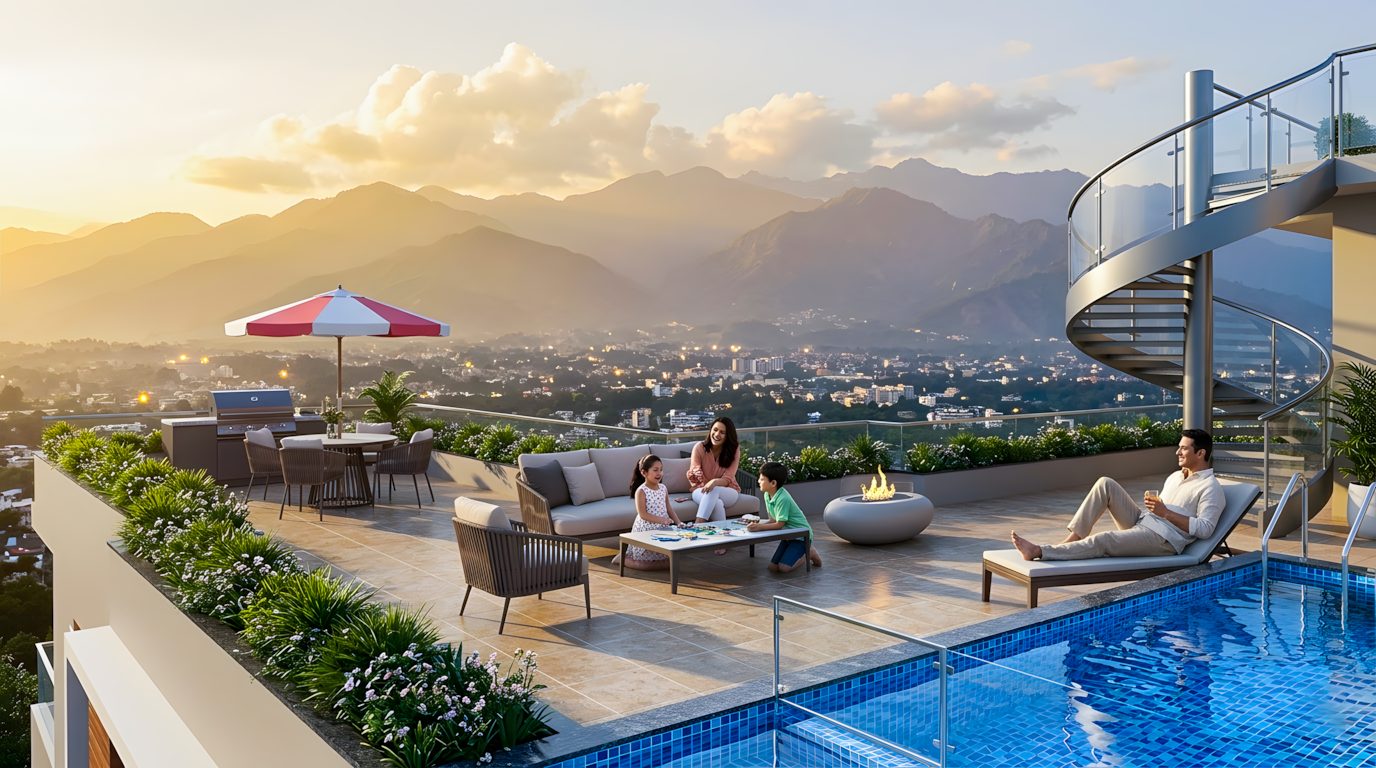
From Chandeliers to Clean Air: How the Definition Has Evolved
For much of the 2000s and early 2010s, luxury homes in India followed a fairly predictable formula. Imported fittings. Grand lobbies. High-rise exclusivity. The bigger the chandelier, the more premium the positioning.
This wasn't arbitrary it reflected a particular moment in India's economic aspirations. Owning something visibly expensive was a powerful signal of having arrived. Real estate was as much a status statement as it was a home.
What Buyers Are Choosing Today
The calculus has changed. Significantly.
Today's premium apartment buyer in India is more likely to ask about the nearest park than the height of the lobby ceiling. They want to know if there's a jogging track, a yoga deck, or a space where their children can play safely without supervision.
They're asking whether the development has sustainable design features, low-density living, and meaningful green cover.
The conversation has moved from aesthetics to experience. From possession to quality of life.
Wellness, open spaces, clean environments, smart amenities, work-from-home infrastructure, and genuine community these are the new pillars of luxury living in India.
The Rise of Wellness-Centric and Nature-Forward Living
There's a reason searches for "green homes," "low-density townships," and "mountain view homes" have surged on every major real estate platform in recent years.
Indians particularly those who've spent the better part of their careers in congested, polluted urban centres are actively seeking environments where health isn't an afterthought.
The pandemic accelerated what was already a quiet undercurrent. When people were forced to spend months indoors, the quality of their immediate surroundings became impossible to ignore.
Those who had a balcony with a view, or a community garden to walk in, experienced the lockdown very differently from those who stared at a concrete wall.
What Wellness in Housing Actually Means
Wellness-centric living is not a marketing phrase. It manifests in very tangible ways:
- Homes oriented to maximise natural light and ventilation
- Walking and cycling paths within the community
- Parks, water bodies, and tree cover that bring down ambient temperatures
- Sports facilities badminton courts, swimming pools, multi-purpose arenas that make staying active a part of daily life
- Low-density layouts that give residents genuine breathing room
The demand for homes that face natural landscapes whether a river, a forest, or mountain ridgelines has become one of the defining trends in Indian premium housing. A mountain-facing apartment in a well-planned development now carries the kind of premium that a high-floor city tower commanded ten years ago.
Integrated Townships: The Future of Smart Living in India
Perhaps no concept reflects the new luxury more completely than the integrated township.
The idea is elegantly simple: build a community where residents can meet most of their daily needs without leaving the gate. Schools for the children. A healthcare facility nearby. Retail, dining, and daily conveniences woven into the fabric of the development.
Sports and recreation facilities. Spaces for community gathering whether that's a amphitheatre, a clubhouse, or a quiet temple courtyard.
Why Integrated Living Appeals to Modern Buyers
The appeal is not about isolation or insularity. It's about convenience that doesn't compromise quality.
Think about the daily friction points of city life the school run across three traffic signals, the weekend errand that becomes an hour-long ordeal, the sense that everything important is always somewhere else.
A well-designed integrated township removes much of that friction.
Residents of thoughtfully planned townships often describe a particular kind of ease that becomes part of their daily rhythm. There's a community feel neighbours who become friends because they share paths, playgrounds, and common spaces.
Children who grow up with other children in a safe, walkable environment. Elderly residents who find purpose and dignity in social spaces designed for them.
This is smart living not in the sense of app-controlled lights, but in the deeper sense of living that's been designed to work for you.
Sustainable living features rainwater harvesting, solar infrastructure, native landscaping, waste management systems have also become near-mandatory in new township developments that take their positioning seriously.
Buyers are increasingly aware, and they're asking the right questions.
Why Tier-2 Cities Like Dehradun Are Becoming India's New Luxury Destinations
This is where the story becomes particularly interesting.
For much of India's real estate history, luxury was a metro phenomenon. If you wanted premium housing, you went to Mumbai, Gurugram, Bangalore, or Hyderabad. Tier-2 and Tier-3 cities were the places you moved from, not to.
That narrative is being dismantled, city by city.
Dehradun is among the most compelling examples of this shift.
The Dehradun Advantage
Nestled in the Doon Valley with the Shivalik ranges as a backdrop and the Rishikesh-Haridwar belt within easy reach, Dehradun offers something that no metro city in India can replicate a genuinely beautiful natural environment combined with rapidly improving urban infrastructure.
Air quality, green cover, a human-scale pace of life, good educational institutions, improving road and rail connectivity Dehradun checks boxes that matter enormously to the quality-of-life buyer.
And with remote and hybrid work now a permanent reality for a significant portion of India's professional class, geography has become less of a constraint than it's ever been.
Demand for luxury flats in Dehradun has consequently seen a sustained rise, driven not by speculative investment but by genuine end-use buyers who want to actually live here.
These are families relocating from Delhi, Noida, Gurugram, and Mumbai not because they've given up on ambition, but because they've redefined what a successful life looks like.
The market for flats in Dehradun now spans a wide range, but the premium end has seen particular sophistication. Buyers seeking luxury in Dehradun are not simply looking for a large apartment.
They're looking for a holistic address one that offers mountain views, community amenities, clean air, good schools, and a sense of belonging.
Infrastructure investments the expansion of NH-7 and NH-72, the Dehradun-Delhi Expressway project, the operationalisation of Jolly Grant Airport's expanded capacity, and the Smart City Mission initiatives are giving the city the connective tissue it needs to sustain this growth.
The Emotional Architecture of Modern Luxury
Here is the part that no brochure quite captures.
Luxury living, at its truest, is about how a place makes you feel over the long arc of your daily life not just on the day you move in.
Raising Children Differently
Parents who have made the move from urban density to planned communities with green surroundings speak about it in terms that go beyond property appreciation.
They talk about their children cycling to a friend's home. About school runs that don't involve highway traffic. About evenings spent in the community park rather than on screens.
There's something quietly profound about giving a child the experience of growing up in proximity to nature, in a community where people know each other.
The Work-From-Home Dividend
For professionals who now work remotely, even part of the week, the home has become a place of productivity, restoration, and creative thinking not just a place to sleep.
A home in a well-designed, thoughtfully landscaped township, with a view of forested hills and the sound of a river nearby, simply functions better as a workspace. Cognitive research has long established the link between natural environments and mental performance.
The Quiet Return of Community
One of the things most people don't anticipate until they experience it: how much they value knowing their neighbours.
Modern township living when designed well creates the conditions for genuine community. Shared spaces that people actually use. Events that bring residents together. A sense that you're part of something, not just housed in it.
This sense of belonging has become, for many buyers, the ultimate luxury. Not marble. Not square footage. Not a view from the 35th floor.
Conclusion: A New Address for a New Definition
The evolution of luxury living in India is not a passing trend. It reflects something deeper a maturing relationship between Indians and the idea of home, shaped by lived experience, global awareness, and a growing understanding that how you live matters as much as what you own.
The buyers leading this change are choosing wisely. They're choosing environments where wellness is built into the design, where community is cultivated rather than incidental, where sustainability is a commitment rather than a checkbox. They're choosing cities that offer beauty, connectivity, and genuine quality of life.
And in this landscape, communities in Dehradun that have been thoughtfully designed around these very principles with riverside settings, layered green cover, modern amenities, and an integrated ecosystem of schools, healthcare, recreation, and daily convenience are not just reflecting this new definition of luxury. They're helping define it.
The most luxurious thing you can have, it turns out, is a life that feels worth living every single day.


